
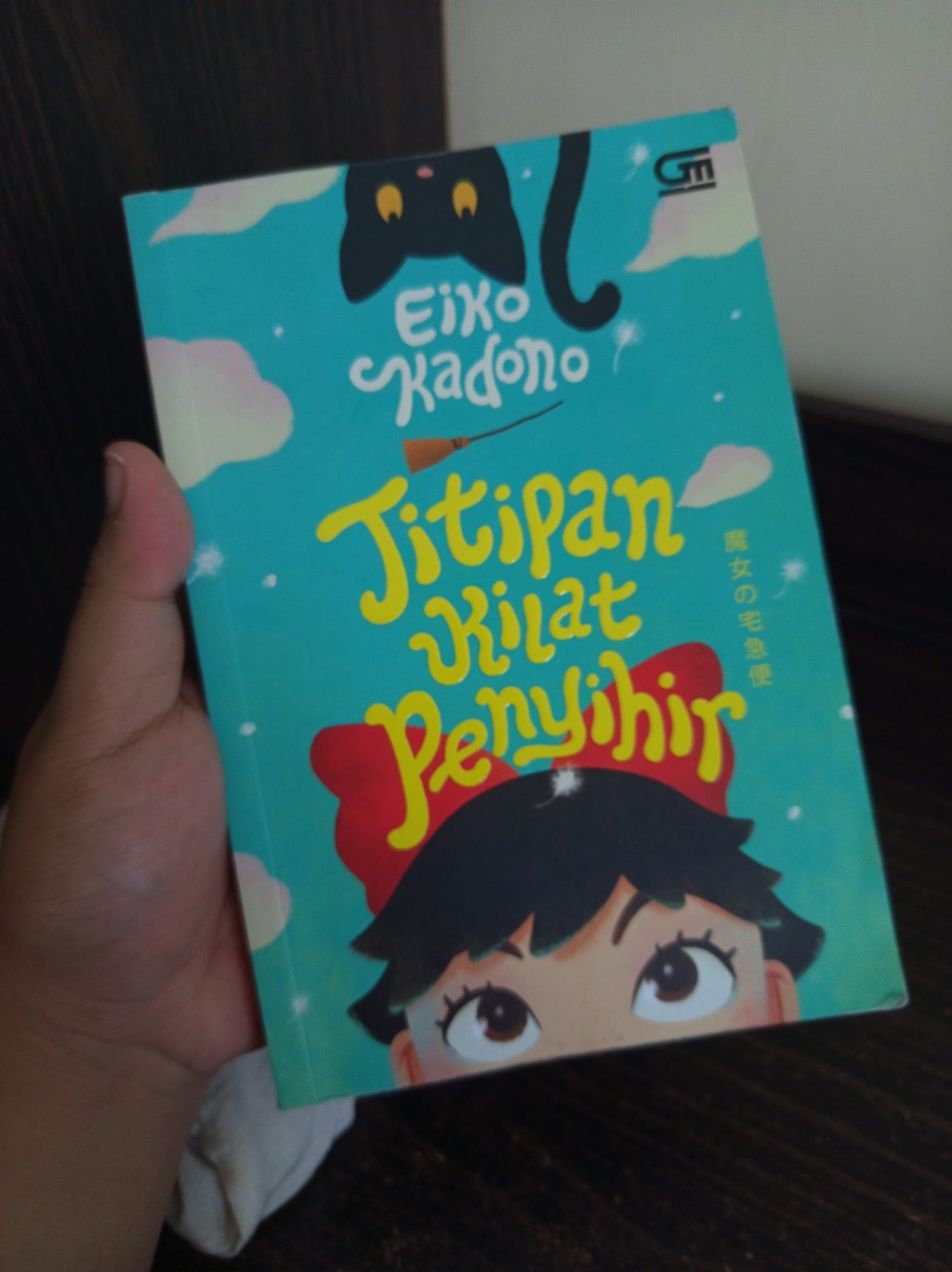
I see a lot of myself in Kiki. The heart of an adventurer, with initial misanthropic tendencies in a new place. A ‘misplaced’ resident of the world. A lost child, trying to find her place. A little oddball out on the indifferent universe. Being written as a children’s literature, Titipan Kilat Penyihir is heartwarming-ly existential.
Titipan Kilat Penyihir is an Indonesian translation of 魔女の宅急便その or Witch’s Express Home Delivery (1985) written by Eiko Kadono. This book follows Kiki, a teenager witch turned 13, who need to spend a year out of town as a tradition. This book is later adapted into an anime by Ghibli Studios titled Kiki’s Delivery Service (1989). Albeit, the anime story is a bit distinct than the source material. The novel though, tells a story that has a closer message to anyone who long for a community.
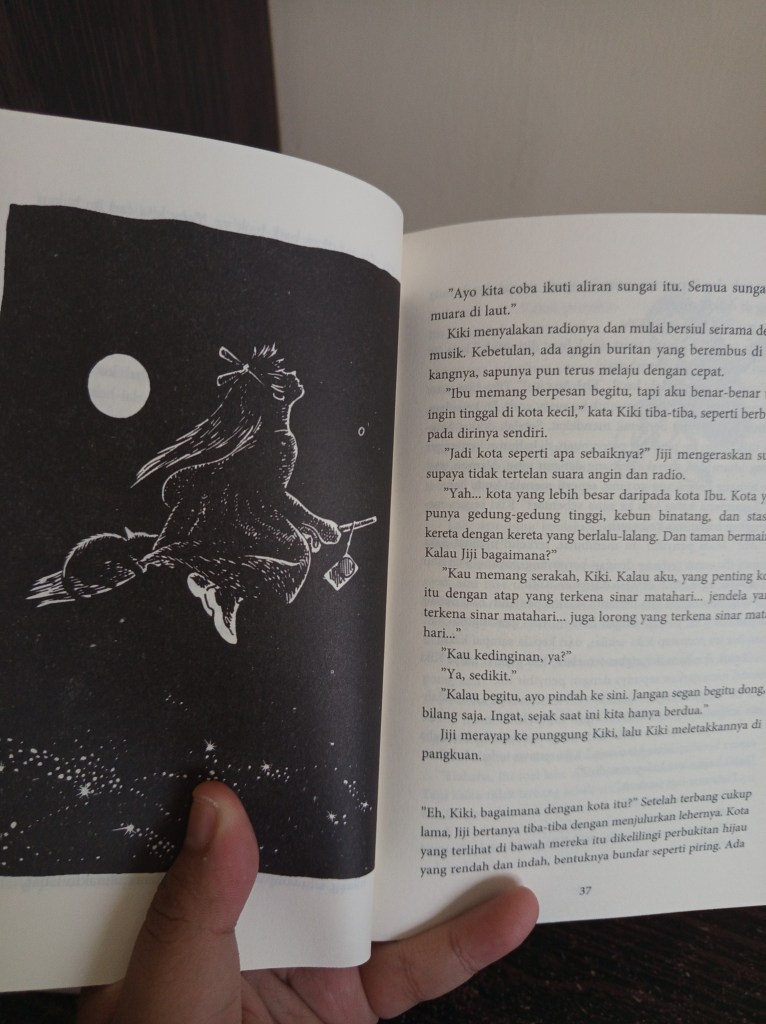
I have to confess that I hadn’t watch Kiki’s Delivery Service before I read the source material. Not that because I am ‘reading the source material before the adaption’ kind of guy—although I admit, I am trying to be that kind of guy, but because I feel like any Ghibli movies exert and require certain kind of energy that I need to attune to at first. I haven’t watch a lot of them, and Kadono’s book fell into my lap first before I even decided if I want to watch the movies.
After I watched the movie, I feel like that the novel offered different something. The story are different in a lot of areas, yes, but the heart is all the same. It brings us to a tale of a misplaced kid in a community, the misadventures, and the exploration of emotional turbulence of a teenager.
The book has 11 chapters and requires Kiki to solve different problems for each. Each problems deal with different facet of Kiki’s new life in Koriko. From dealing with baby’s pacifier to traveling musician’s instruments, Kiki’s stories depict her own apprehension while undertaking tasks from different clients. Despite being a witch, she is only a teenager at that, and her art only consists of flying while all the other magic is withered away in her lineage. Yet, Kiki’s missions here is not to search for her lost art, but to find a way to solidify her own art into herself, while in a non-familiar setting. Makes the novel into an allegory of the art of being lost.
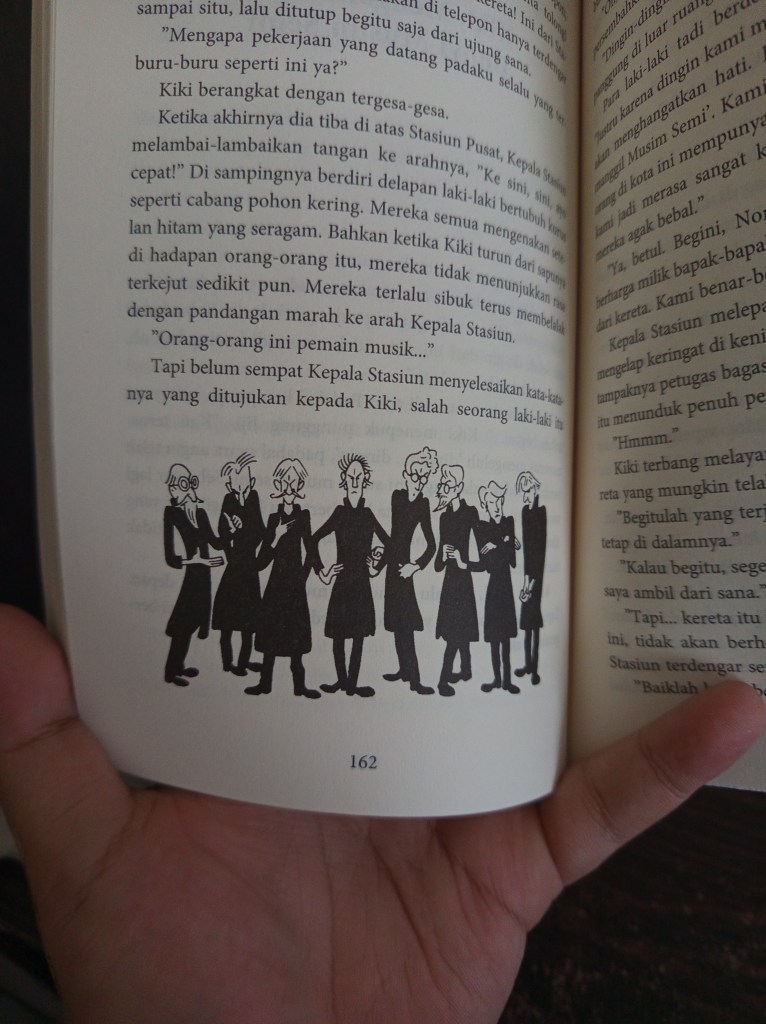
I haven’t read enough children’s lit yet, but I feel like this book is up there along with Le Petit Prince (1943) by Antoine de Saint-Exupéry and Historia de una gaviota y del gato que le enseñó a volar (1996) by Luis Sepúlveda. There is this magical yet timeless-ly relatable quality that makes me love the story. The translation kept the innocence vibes of children, which makes the story accessible without losing too much of the intended meaning and message.
Book Identification
| Title | : Titipan Kilat Penyihir |
| Writer | : Eiko Kadono |
| Translator | : Dina Faoziah & Junko Miyamoto |
| Publisher | : Gramedia Pustaka Utama |
| Year | : 2024 |
| Pages | : 200 pages |
| ISBN | : 978-6-020-67-6777 |



 Kasat Kata Kultur
Leave a comment