
First Published in Indonesian on Balebengong, 27th March 2026.
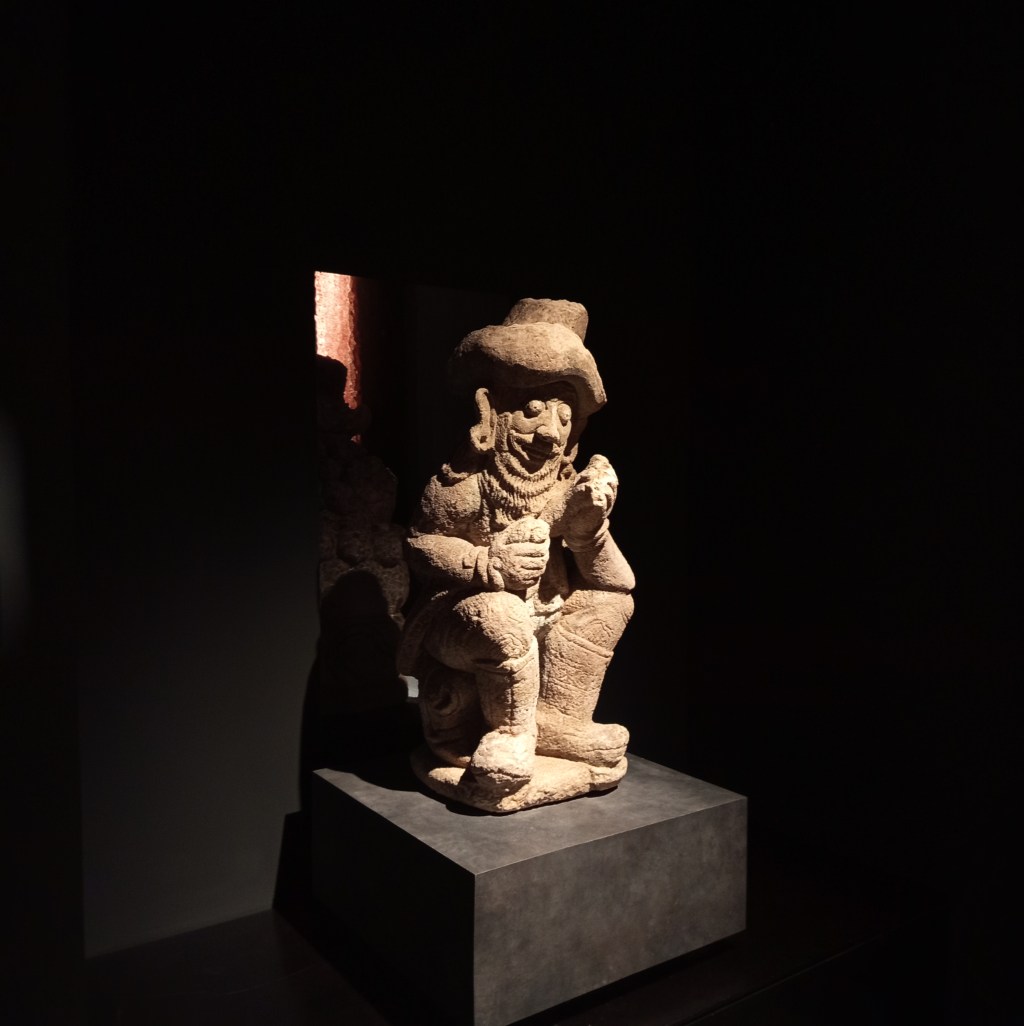
At the SAKA Museum, I came face-to-face with the statue’s piercing eyes. The design was unusual. There were lines of cruelty and laughter. Instead of a mace, he carried a rifle. If I were to ask, everything felt crooked. His character. His appearance. His thick, tangled beard was battered by the sea breeze. His back, seemingly covered in barnacles. The label explained that the statue was of a 19th-century Dutch sailor.
Supposedly, several temples and palaces in Bali house statues depicting this colonial figure. These statues stand at the gates, functioning like dwarapala, a sacred artefact necessary in traditional Balinese homes. In Balinese cosmology, dwarapala placed at gates are symbolic and mystical instruments that neutralize foreign forces and presences (Eiseman & Eiseman: 1990).
Dwarapala serve as mirrors of morality; they purify one’s intentions before entering a sacred space. Thus, dwarapala are carved and take the form of stories such as Pan Brayut-Men Brayut, Subali-Sugriwa, Merdah-Tualen, and the giants, so that humans can follow their consciences (Zoete & Spies: 1938, 2002). This allows them to realize their duality (rwa bhineda) and find inner balance (purusa) (Suryani & Jensen: 1993). Thus, through representation, art becomes an attempt to harness the moral power of tales, for one to reflect on.
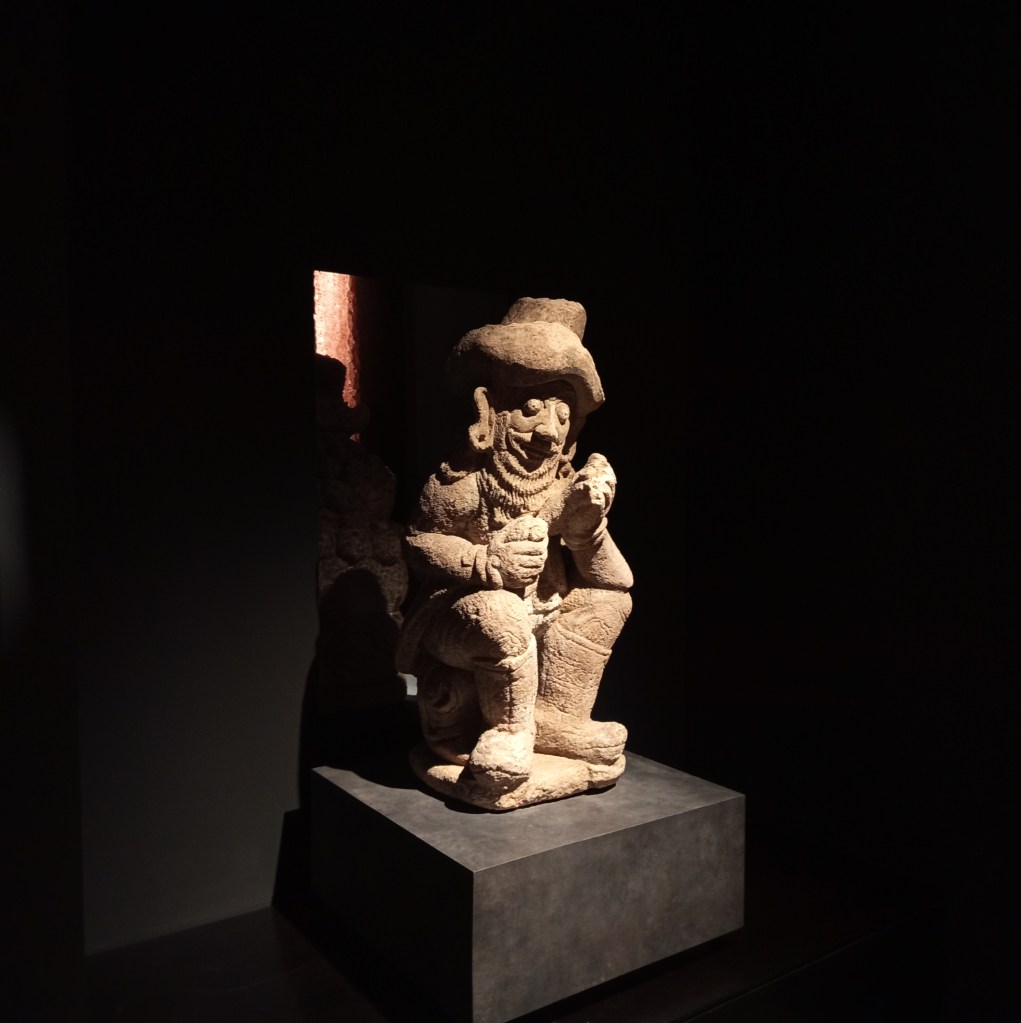
In the context of the Dutch sailor statue, history becomes the subject of this reflection. The colonizers become stories as terrifying as the giants; monuments to contemplate moments of encounter, resistance, and collective memory. Placing the colonizer’s image on the facade of the house reframes history within a spiritual context. Colonial oppression becomes a creative expression, preserving memory and embodying resilience (Said: 1993, Nora: 1989).
Dwarapala are perceived as frightening or unattractive because their function is to ward off evil and negative forces, hence neutralizing them. Dwarapala become affective material for assessing the morality of citizens: are the guests’ core characters similar, or are they seeking self-improvement? Thus, making Dutch colonizers into dwarapala shifts the function of art as a monument reflecting the morality of colonialism; a cultural way to challenge the values that emerged as a result of colonization. Dutch colonial statues have become post-colonial texts par excellence (Bhabha: 1994 and Spivak: 1988).
The Dutch colonizers, as depicted in many history books, came with their inherent violence. Examples of references in the Balinese context include Geoffrey Robinson’s The Dark Side of Paradise: Political Violence in Bali and Alfons Van der Kraan’s Bali at War: A History of the Dutch-Native Relationship in Bali in the Nineteenth Century (1995). As clearly depicted in the records: order was torn apart, resources exploited, and human beings degraded for profit. Their presence in the tangled tangle of national history has profoundly influenced the social, political, and even spiritual contours of Balinese society.
The Balinese have not failed to capture these painful memories, making colonialism part of the torn fabric of their spirituality. The actions and deeds of the colonizers not only tore apart the political order, but also the cosmic order of Balinese society. The colonizers became a representation of chaos and imbalance (adharma).
The adharma that accompanied colonialism became symbolic. This is because colonialism left its mark on collective memory. In the cultural contours, colonization was ingrained in the arts of the people: it penetrated the mystical and spiritual. Colonialism became an evil force that needed to be countered, a modern mythology intertwined with the mythology of the ghosts.
The politics implemented by Dutch colonialism were necropolitics. This concept is an extension of Foucault’s (1998) biopolitics, which questions how nations have various ways to control their populations. Coined by Achille Mbembe, necropolitics emphasizes how repression is used to create conditions that determine who deserves to live and who deserves to die, ultimately shaping a society that is “living dead” (Mbembe: 2003).
In the context of necropolitics, resistance manifests symbolically through the capture of meaning and power. Transforming the figures of colonizers into statues is a way for society (art) to perpetuate necropower (the power of the “dead”) over the discourse of colonialism (Mbembe: 2019). Ironically, the vile nature of colonialism becomes a form that functions in reverse: as a guardian that repels evil forces. What else could this phenomenon be but an expression of metaphysical sovereignty?
This “hybrid” statue, in the Third Space Theory conceptualized by Homi K. Bhabha (1994, ibid.), becomes a space and artifact where the oppressed plan their liberation. Colonialism and its aftermath are discussed in a liminal space, where those who influence and are influenced attempt to define the boundaries of cultural and individual reality. In this statue depicting the colonizer as a giant, the Balinese people assert their agency, creating meaning from their own historical clashes.
At the SAKA Museum, I saw how the Balinese (artistic) community captured the Dutch colonizers to assert their spiritual sovereignty amidst colonialism. This act reframed terror within the realm of the invisible and replaced colonial agents as guardians of the sacred. However, it is necessary to reconsider art’s role as a historical recording machine—as well as its power and reach in resistance. The cruelty of the Dutch colonialists, as depicted in the occupation that began in Sanur in 1906 (Hanna: 2004), was a true tragedy. Art becomes an instrument of memory, so that we do not forget.
The colonial statues created by the Balinese people metaphysically succeeded in countering the historical cruelty of colonialism. However, such is the reach of art; it cannot counter the heinous project of colonialism itself. The statue I saw at the SAKA Museum stands as a monument to the spiritual resilience of the Balinese people, and a silent three-dimensional artifact that contains the story of violence on the Island of the Gods.
Bibliography
- Bhabha, Homi K. (1994). The Location of Culture. London: Routledge.
- Foucault, Michel. (1998). The History of Sexuality, Vol. 1: The Will to Knowledge. London: Penguin.
- Eiseman, Fred B. & Margaret H. Eiseman. (1990). Bali: Sekala and Niskala, Vol. 1: Essays on Religion, Ritual, and Art. Singapore: Periplus Editions.
- Mbembe, Achille. (2003). “Necropolitics.” in Public Culture, vol. 15, no. 1, 2003, p. 11–40.
- Mbembe, Achille. (2019). Necropolitics. Durham: Duke University Press.
- Nora, Pierre. (1989). “Between Memory and History: Les Lieux de Mémoire.” in Representations, no. 26, 1989, p. 7–24.
- Robinson, Geoffrey. (1995). The Dark Side of Paradise: Political Violence in Bali. Ithaca: Cornell University Press.
- Said, Edward. (1993). Culture and Imperialism. New York: Knopf.
- Spivak, Gayatri Chakravorty. (1988). “Can the Subaltern Speak?” in Marxism and the Interpretation of Culture, ed. Cary Nelson & Lawrence Grossberg. Urbana: University of Illinois Press.
- Suryani, Luh Ketut & Gordon Jensen. (1993). The Balinese People: A Reinvestigation of Character. Singapore: Oxford University Press.
- Van der Kraan, Alfons. (1995). Bali at War: A History of the Dutch-Native Relationship in Bali in the Nineteenth Century. Clayton: Monash University Center of Southeast Asian Studies.
- Willard A. Hanna (2004). Bali Chronicles. Periplus, Singapore.
- Zoete, Beryl de & Walter Spies. (2002). Dance and Drama in Bali. London: Periplus Editions.
 Kasat Kata Kultur
Leave a comment